Quick answer: Approved time away and pay for that time are separate decisions. Knowing the distinction prevents payroll surprises.
An employee requests three days off but assumes those days will be paid. The scheduling response may only confirm that they are not assigned work on those dates.
Understand the situation before changing anything
An employee requests three days off but assumes those days will be paid. The scheduling response may only confirm that they are not assigned work on those dates.
Good workplace communication is specific and timely. Describe what happened, what you have already checked, which dates are affected and the decision you need from your manager, without disclosing unnecessary private details. Start with the specific decision you need to make. A good first question is what has already been documented and what is still only an assumption.
A practical way to handle it
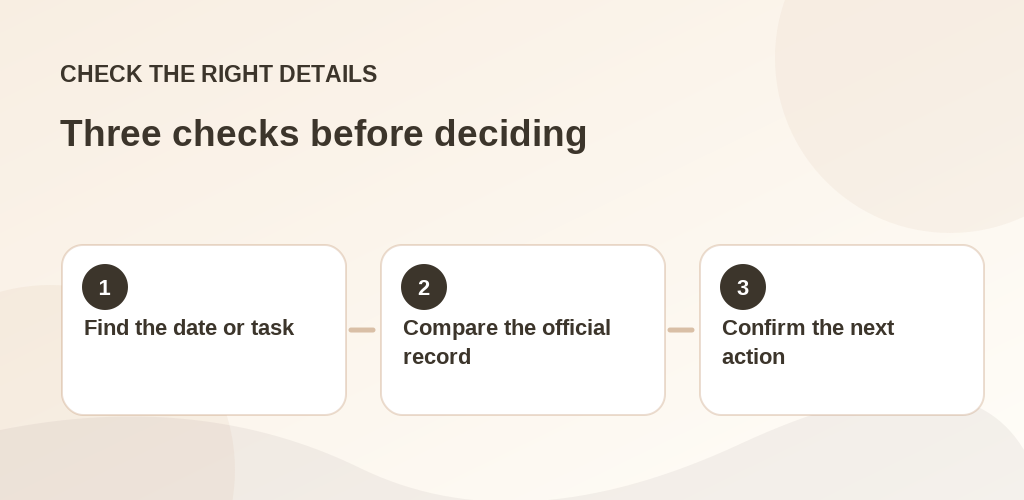
Identify the type of request, review available paid balances and submit correct coding or forms where required. Confirm both schedule approval and pay treatment independently.
Before acting, take a moment to confirm which date, location and personal circumstances are relevant. Keep any supporting evidence in a private, appropriate place; if you need help, ask a precise question instead of sending a broad request without the necessary context.
Make your next conversation useful
Explain the situation in one sentence, then list what you have already checked and what needs a decision. This makes it easier for the appropriate store leader, benefits administrator or official support team to respond with information that matches your specific case.
Example: turning confusion into a clear next step
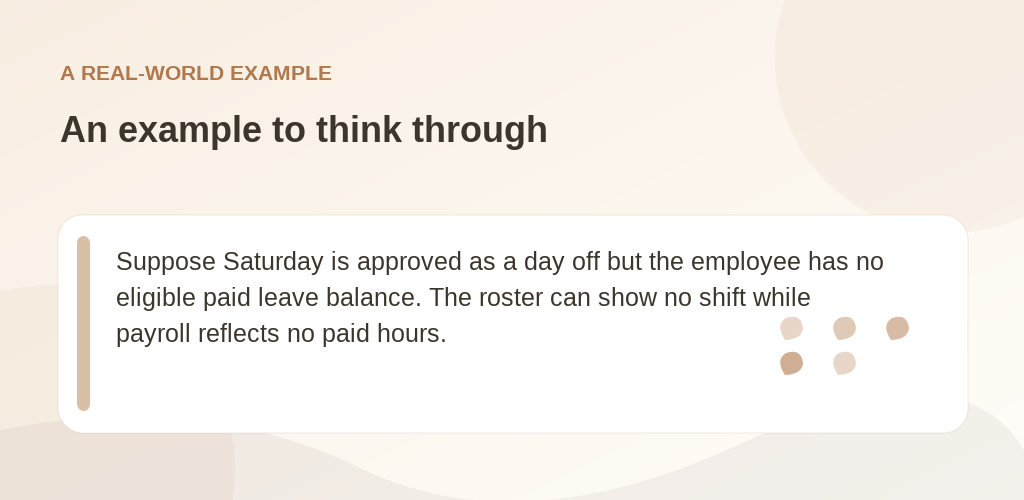
Suppose Saturday is approved as a day off but the employee has no eligible paid leave balance. The roster can show no shift while payroll reflects no paid hours.
Notice the difference between identifying a possible explanation and confirming what actually happened. An example helps frame a question; it cannot prove how a real employee’s account, schedule or benefits will be handled. The final answer always depends on the approved company process and current records.
Common mistakes to avoid
Avoid treating a generic “approved” notification as a pay guarantee. Sick leave, vacation and other protected absences can follow different rules.
- Do not treat an unsourced post, old screenshot or search snippet as a current workplace rule.
- Do not share passwords, verification codes, personal payroll information or another employee’s details with this website.
- If your situation affects a deadline, ask for confirmation before assuming a request has been processed.
What to verify with an official source
Ask for clarification before the payroll cutoff if you expect a paid-time entry.
This article is educational, not an official Starbucks Partner Guide or employment advice. Local law, store instructions and applicable collective bargaining provisions may change the relevant rule.
Official sources and further reading
The links below are Starbucks-run pages. Their inclusion does not imply this independent website is affiliated with or endorsed by Starbucks.
Questions people also ask
Does unpaid leave automatically mean a benefits penalty?
Not necessarily. Relevant plan rules and protected leave categories need separate review.
Where can I see information for my exact store or account?
Check the Starbucks-approved systems, communications and current Partner Guide for your market. For a decision involving individual eligibility, pay, scheduling or policy, contact the store leader or official support team who can view the right records.
Is this an official Starbucks policy update?
No. This is independent explanatory content based on public resources and general workplace practices. Company guidance and plan documents take precedence where they differ from this article.
Related Starbucks partner guides
Starbucks Dress Code Checklist Before Your First Shift
Dress expectations can vary by role, location and updated Starbucks guidance. The simplest approach is to consult official current…
Read the guide →
Starbucks Shift Swap Approval Checklist
A trade is not necessarily complete when two coworkers agree. A final approved schedule protects both parties from confusion.
Read the guide →
How to Raise a Workplace Scheduling or Safety Concern
Clear documentation and the right reporting channel help turn a difficult situation into a reviewable issue.
Read the guide →For a broader overview, visit our workplace policies guide or browse the complete resource library.